


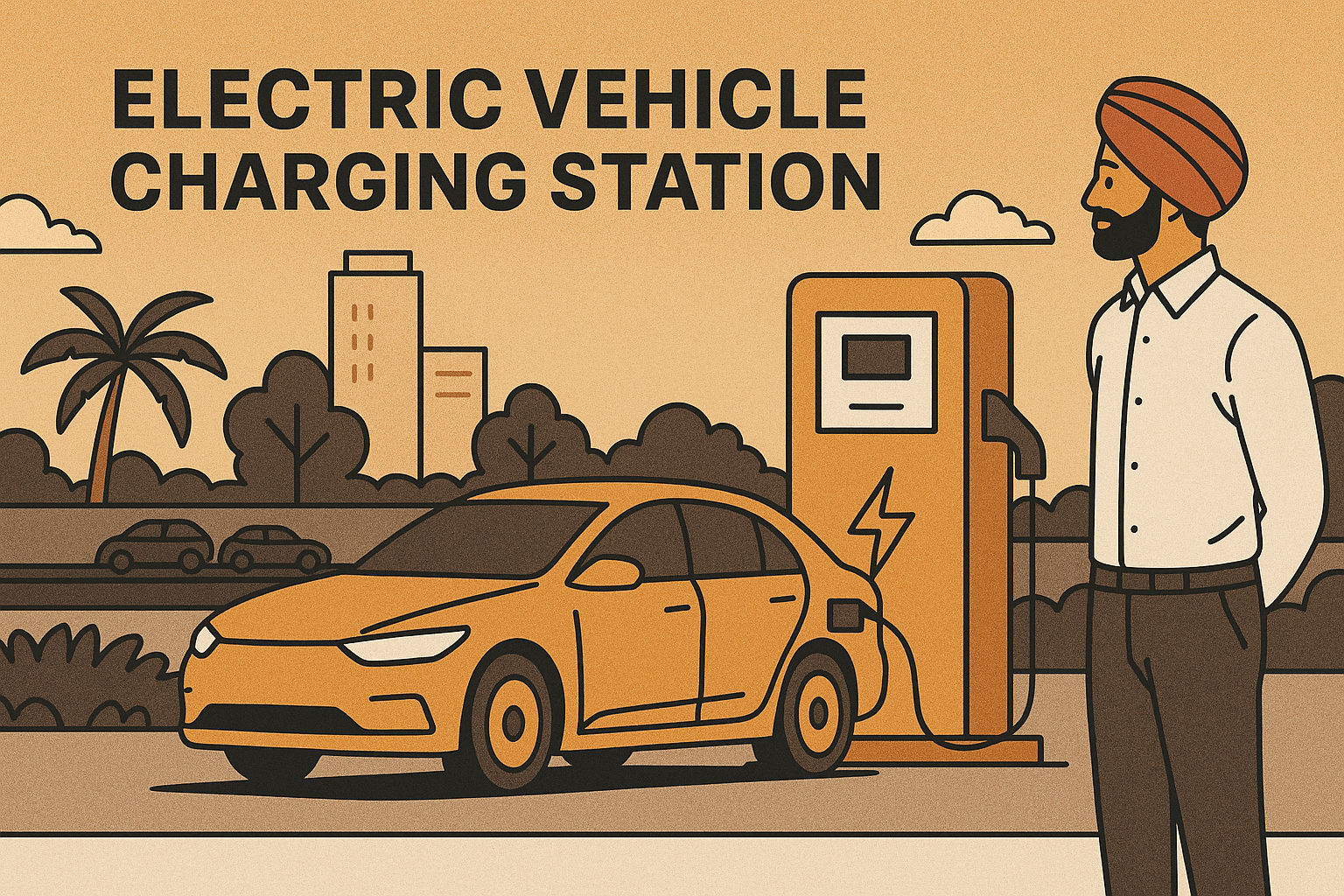
Profitable Pathways: Building an “EV Car Charging Station near Me” Enterprise in India
India’s electric-vehicle surge is no longer a projection; you see it daily in crowded showrooms, progressive government policies, and the ever-popular search term “EV car charging station near me”. From metro arteries to tourist corridors, more than 934 public chargers are already live, yet demand still outruns supply. You stand at a rare moment when infrastructure gaps, supportive regulation, and consumer enthusiasm converge to create an exceptionally rich business window. By positioning a well-located, technology-enabled charging site, you harvest immediate charging fees while opening doors to data monetisation, value-added retail, and long-term asset appreciation. This guide walks you through prime locations, viable models, financial planning, partnership options, operational metrics, and innovative alternatives so you can secure a resilient stake in India’s fastest-growing energy network.
Top Charging-Station Opportunities and Locations
Location dictates utilisation, utilisation drives revenue, and revenue secures investor confidence. Urban commuting hubs still headline the opportunity, yet saturation approaches quickly in Tier-1 city centres. Real growth now lies in Tier-2 outskirts, highway rest areas, tech parks, and tourism clusters. Every major national highway corridor designated for upcoming electric bus fleets now needs rapid chargers at 50-kilometre intervals. A single high-traffic rest stop on such a corridor can record thirty to forty sessions a day because interstate travellers plan routes around charging certainty. Within cities, gated communities with 300-plus flats call out for dependable overnight charging; you supply the hardware, and the resident welfare association delivers captive demand at negligible marketing cost. Shopping malls, cinema complexes, hospitals, and corporate campuses convert casual footfall into multi-hour dwell times, letting you blend slower AC chargers with premium DC guns. Municipal bodies are rolling out “Switch Delhi”-style initiatives that pre-approve kerbside micro-stations near metro stations and bus depots. Securing one of these licences embeds your brand in the commuter’s daily routine. Pilgrimage routes also reveal hidden value: long-distance tourists rely on predictable energy top-ups and reward early entrants with loyalty before rivals appear. Combine these micro-markets into a network and you create the same “always within reach” perception that made legacy fuel pumps household names.
Business Models and Revenue Comparison
You can monetise a charging asset through three frameworks: charge-point ownership, charge-point operation, and platform partnership. Full ownership gives you maximum tariff control and asset equity. Capital outlay runs from about ₹3.5 lakh for a 7 kW AC charger to roughly ₹32 lakh for a 60 kW DC fast charger, including civil works, transformers, and connectivity upgrades. In return, you set flexible session fees, time-of-day premiums, and membership plans. The operational model, by contrast, sees you lease land or roof space to a larger charging provider. Up-front cost can fall below ₹1 lakh because the network funds equipment, installation, and software; your earnings flow via revenue-share, commonly fifteen to twenty-five per cent of gross receipts. Platform partnership—offered by players such as ThunderPlus—strikes a middle course. You invest in hardware supplied at enterprise rates, let the platform manage software, maintenance, and energy optimisation, then split revenue while retaining physical ownership. Beyond direct charging fees, each model unlocks ancillary income: parking charges, in-store spend by waiting customers, rooftop solar feed-in, and targeted advertising on charger screens. Cash-flow profiles differ, yet break-even periods of twenty-four to thirty-six months remain achievable in correctly matched demand zones, especially when you integrate dynamic pricing algorithms that lift margins during peak hours.
Investment and Partnership Strategies
Capital efficiency starts with site control. Negotiate multi-year land leases that cover transformer upgrades and signage rights. Secure energy-supply agreements under the latest Ministry of Power guidelines that offer special EV tariffs often twenty per cent lower than commercial slabs. Apply for state incentives; Maharashtra, Gujarat, Delhi, Telangana, and Tamil Nadu reimburse between twenty-five and seventy per cent of equipment costs, convertible into GST refunds or direct subsidies credited to your DISCOM bill. When raising funds, present your project as infrastructure with ESG upside, attracting green-bond investors who value carbon abatement per kilowatt-hour as much as dividends. Blended finance works well: anchor funding from a strategic fleet operator assures immediate utilisation, while sub-ten-per-cent debt from small-industry banks covers hardware. Franchise tie-ups extend reach without over-leveraging. ThunderPlus, for instance, offers franchise opportunities aimed at charge-point operators and large fleet owners; by piggybacking on their end-to-end solution, you reduce entry friction, access a national roaming network, and still brand your forecourt locally. For equity partnerships, draft shareholder agreements that allocate capital for future port expansion; scaling from two fast chargers to six within eighteen months usually multiplies revenue faster than adding new sites because customer stickiness rises with shorter queues.
Success Metrics and Performance Analysis
Key performance indicators keep investors patient and operations agile. Energy dispensed per day lies at the core; target at least 120 kWh daily per 60 kW charger to assure positive cash flow after power costs. Session frequency reveals utilisation; figures above ten sessions per connector signal healthy demand, while numbers below five prompt price adjustments or publicity drives. Average connection duration affects bay throughput; trim idle dwell time by sending mobile push alerts five minutes before charge completion. Revenue per kilowatt-hour gauges pricing success; premium locations often earn ₹20-₹22 per kWh versus ₹14-₹16 in residential complexes. Your operating-cost ratio measures efficiency; aim to cap combined energy, rent, and maintenance at sixty per cent of gross revenue. Customer-satisfaction scores, gathered through in-app ratings, directly influence repeat business and corporate fleet contracts. Data insights should guide expansion: heat maps from your charger locator uncover charge deserts, while session origin-destination analysis highlights profitable cross-selling opportunities such as café tie-ins. Publish these metrics consistently and lenders extend credit lines more readily, while strategic partners treat your brand as a reliable ally in their electrification roadmap.
Alternative Business Models
Battery swapping, once a two-wheeler niche, now lures entrepreneurs in the three-wheeler freight and e-rickshaw sectors. You install modular cabinets holding lithium-ion packs, typically priced at around ₹45,000 per slot, and charge a per-swap fee. The model thrives on predictability because drivers exchange exhausted batteries in under five minutes, keeping vehicles productive longer. Another promising avenue involves mobile charging vans fitted with onboard generators or portable battery banks for roadside emergencies or valet charging at gated events. Subscription-based home-charger leasing scales quickly; you bulk-purchase smart AC chargers at roughly ₹28,000 apiece, install them for zero up-front cost, and collect monthly service fees that bundle electricity and maintenance. Solar-integrated charging marries green branding with lower daytime power bills. A canopy-mounted 30 kW solar array costs about ₹18 lakh but offsets grid purchase during peak sun hours, trimming operating expenses by up to thirty per cent. Finally, you can pivot to data-as-a-service, anonymising session patterns and selling insights to urban planners eager to optimise future corridors. All these models share a single trait: they diversify revenue and hedge against policy or technology shifts in the core fast-charging arena.
Conclusion
India’s electric-mobility momentum guarantees that “EV car charging station near me” will remain one of the country’s hottest local search queries for years. By locking down strategic sites, choosing the right ownership-operation blend, and leveraging state incentives, you turn today’s infrastructure deficit into tomorrow’s annuity stream. Charging revenue offers dependable daily cash flow, while value-added services—from retail rentals to data analytics—raise the ceiling on profitability. Partnerships with turnkey solution providers, including ThunderPlus, dilute technical risk and broaden your customer funnel. Scalable hardware, cloud-based energy management, and solar integration future-proof your asset against rising power tariffs and policy shifts. Capital markets increasingly reward green infrastructure, giving you attractive exit multiples if you decide to divest or merge. Act decisively: study local travel patterns, secure energy connections, finalise equipment finance, and break ground before the next wave of entrants saturates prime territory. The sooner you embed your chargers into daily commutes, the stronger your competitive moat and the more resilient your long-term margins.
Frequently Asked Questions
Q: What is the market potential for an “EV car charging station near me” in India?
A: Vehicle registrations for electric two-, three-, and four-wheelers are growing at double-digit monthly rates, while charger deployment lags, leaving several million units still required by 2030. Even a mid-sized city often hosts fewer than fifteen public chargers, so your entry meets pent-up demand and attracts both private and commercial fleets seeking reliable energy stops.
Q: What are the typical start-up costs?
A: Costs depend on charger type, site preparation, and grid upgrades. A basic 7 kW AC setup needs roughly ₹3.5 lakh, a 30 kW DC unit costs about ₹16 lakh, and a flagship 60 kW dual-gun system with canopy, signage, and payment kiosk can reach ₹32 lakh. Land lease, transformer augmentation, and software subscriptions add another ten to twenty per cent.
Q: Which licences and approvals are required?
A: You need municipal trade licences, state electrical-inspector approvals, fire-safety clearances, and, where relevant, environmental no-objection certificates. The Bureau of Indian Standards mandates compliance with Bharat AC01, Bharat DC01, and newer CCS2 protocols. Many DISCOMs now offer a single-window process bundling these clearances within thirty to forty-five days.
Q: How can I diversify revenue streams beyond per-kWh tariffs?
A: You can collect parking fees, sell refreshments or retail space, host digital advertising on charger screens, lease roof area for telecom antennas, and benefit from solar feed-in credits. Fleet subscription contracts provide fixed monthly income, while data-analytics packages serve urban planners and real-estate developers.
Q: What operational support is available?
A: Hardware suppliers, energy utilities, and specialised networks provide assistance. Turnkey providers handle predictive maintenance, remote diagnostics, and software upgrades. ThunderPlus, for example, delivers end-to-end solutions for charge-point operators and fleet owners, including equipment procurement, installation expertise, and access to a roaming payment platform.
Q: How robust are growth projections?
A: Government policy targets ten thousand public chargers in major cities and continuous coverage every five hundred kilometres on highways within the next three years. Analysts foresee compound annual growth rates above thirty-five per cent for charging revenue, with utilisation accelerating as battery prices drop and vehicle ranges expand. Enter now and your early scalability positions you as a regional leader when mass adoption peaks.
⚡ Ready to Start Your EV Charging Business with ThunderPlus?
Launch your profitable venture in the fastest-growing sector of sustainable mobility. ThunderPlus offers proven franchise opportunities with comprehensive support, ensuring your success in the electric vehicle charging market.
Explore Business Opportunities:
– Discover franchise opportunities at thunderplus.io
– Contact us on WhatsApp: +91 7093935566
– Visit our website: https://www.thunderplus.io
Why Partner with ThunderPlus:
– Proven business model with 18-24 month ROI
– Comprehensive training and ongoing support
– Protected territory and established customer base
– Growing market with 40% annual EV sales growth in India